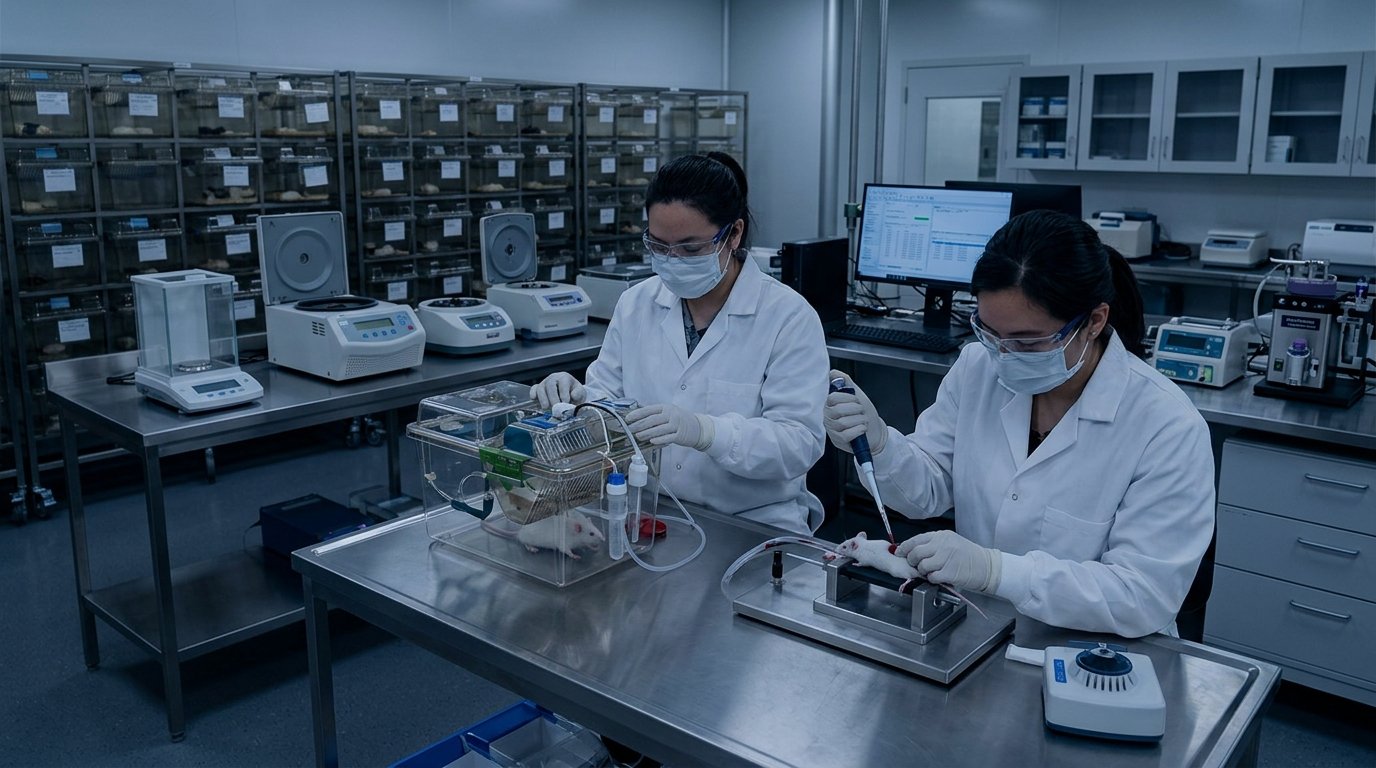
Rigorous animal-based pharmacological studies designed to evaluate therapeutic efficacy, safety profiles, and disease-modifying potential of candidate molecules in well-characterized model systems — conducted under CPCSEA ethical oversight and GLP-aligned documentation standards.
Preclinical pharmacology forms the scientific cornerstone for advancing any therapeutic hypothesis from the bench to translational phases. At Unitech Research Solutions, our preclinical division utilizes established, peer-reviewed animal disease model paradigms to characterize pharmacodynamic activity, mechanism of action, and preliminary safety boundaries of test substances — including plant extracts, synthetic molecules, nano-formulations, and repurposed drug candidates.
Animal Pharmacology Suite
STZ (streptozotocin) and alloxan-induced type-2 diabetic models in Wistar/Sprague-Dawley rats. Parameters assessed include fasting blood glucose (glucometer & enzymatic colorimetric), oral glucose tolerance test (OGTT), insulin sensitivity index, HbA1c, lipid profile (TC, TG, HDL, LDL-VLDL), liver glycogen content, and pancreatic histopathology. Data compared against standard agents (Glibenclamide, Metformin).
Carrageenan-induced paw edema (acute inflammation), Complete Freund's Adjuvant (CFA) arthritis model (chronic inflammation), cotton pellet granuloma (sub-acute), and acetic acid-induced writhing test (analgesic activity). Edema volume measured by plethysmometer; cytokine quantitation (TNF-α, IL-6, IL-1β) by ELISA. Reference: Indomethacin, Aspirin, Diclofenac.
Morris Water Maze for spatial memory and hippocampal-dependent learning, Elevated Plus Maze for anxiety index quantification, forced swim test and tail suspension test for antidepressant activity, Eddy's Hot Plate and Tail Flick for analgesic/antinociceptive profiling. Biochemical: AChE activity, brain oxidative stress (MDA, GSH, SOD, CAT).
Ethylene glycol and ammonium chloride-induced urolithiasis model in male Wistar rats. Urinary parameters (oxalate, calcium, phosphate, creatinine clearance, uric acid, volume), serum kidney function tests (BUN, creatinine, uric acid), and renal histopathology (H&E and von Kossa staining for calcium deposits) are systematically evaluated.
Excision wound model (wound contraction rate and epithelialization period), incision wound model (tensile/breaking strength by tensiometer), and dead space wound model (granuloma tissue weight, hydroxyproline content). Photography documented at defined intervals. Histological assessment of re-epithelialization and collagen fiber density.
Acute oral toxicity by OECD 420 (Fixed Dose), 423 (Acute Toxic Class), and 425 (Up & Down) methods for LD50/MTD determination. Sub-acute (14-day repeated dose) and sub-chronic (28-day) toxicity with complete gross necropsy, organ weight ratio, haematological panel (CBC, differential), and comprehensive serum biochemistry. Findings interpreted by trained veterinary pathologist.
Discussion of target molecule, route of administration, dose range, disease model selection, and group size. Ethical application and CPCSEA clearance pathway review.
Animals housed under standard conditions (22±2°C, 12h light/dark). Body weight-based stratified randomization into control, disease, standard, and test groups.
Validated induction protocol applied. Test substance administered via defined route (oral gavage, i.p., topical). Body weights and clinical signs recorded daily.
Behavioral, biochemical, and physiological parameters collected at pre-defined intervals. Blood, urine, and organ samples collected at sacrifice.
One-Way ANOVA with Dunnett's or Tukey's post-hoc test using GraphPad Prism. Results expressed as Mean ± SEM. Significance threshold: p < 0.05, 0.01, 0.001.
Structured scientific report with raw data tables, statistical outputs, photomicrographs, and interpretive conclusions. Suitable for thesis, publication, or regulatory filing.
Seeking in-vivo experimental data for dissertations with standardized animal models, ethical clearance documentation, and statistically validated results for publication.
Requiring preclinical efficacy data for regulatory submissions (DCGI/IND filing), proof-of-concept for NCEs, or substantiation of health claim research.
Validating traditional medicinal plant preparations through standardized pharmacological screening and scientific documentation for publication or regulatory use.
Discuss your hypothesis with our preclinical team
Our pharmacology team is available for a confidential scientific consultation.